Modern blockbusters can cost hundreds of millions of dollars to make. But where does all that money actually go? Here’s an honest breakdown of how a film’s budget gets spent — and why the real cost is often even higher than you think.
When you hear that a movie cost two or three hundred million dollars to produce, it’s almost impossible to comprehend. Where could that much money possibly go? The answer is a sprawling, complicated machine of salaries, technology, locations, and logistics — plus an enormous hidden cost that the headline budget figure doesn’t even include. Let’s break down where the money really goes.
The headline number isn’t the whole story
First, an essential point: the “budget” you read about usually refers only to the production cost — the money spent actually making the film. It typically does not include marketing and distribution, which can add a massive amount on top, sometimes approaching or even exceeding the production budget itself. So a film reported to cost two hundred million to produce might require a great deal more before it’s been advertised and distributed worldwide. This is why a movie often needs to earn far more than its stated budget just to break even.
Above-the-line costs: the talent
Film budgets are traditionally divided into “above-the-line” and “below-the-line” costs. Above-the-line refers to the major creative players whose deals are negotiated before production begins: the lead actors, the director, the producers, and the writers.
Top stars and directors can command enormous fees, and these costs can consume a significant chunk of a budget. Beyond flat salaries, major talent often negotiates a percentage of the film’s earnings — meaning their total compensation can balloon if the film succeeds. These deals are a major reason blockbuster budgets are so high: securing the biggest names is expensive, and studios pay it because stars can help draw audiences.
Below-the-line costs: the crew and the work
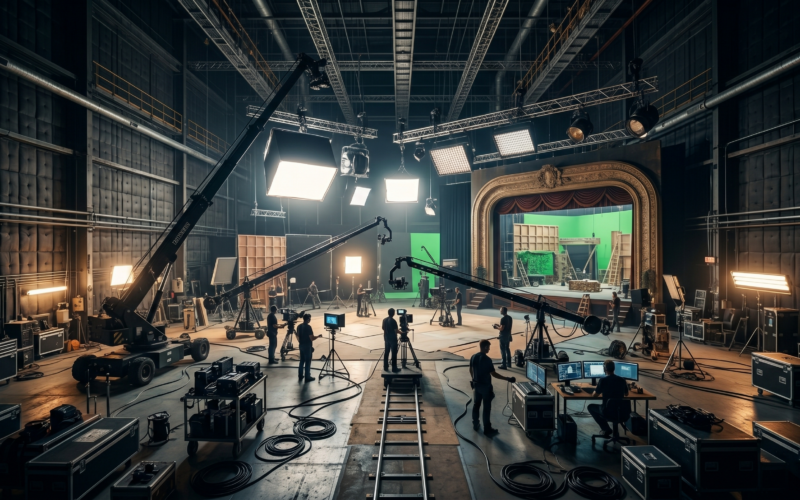
Below-the-line covers the vast machinery of actually producing the film: the hundreds of crew members, equipment, sets, locations, costumes, and all the day-to-day expenses of a shoot. A major film employs an army of skilled professionals — camera operators, electricians, set builders, makeup artists, sound technicians, drivers, caterers, and dozens of other specialized roles — often for months at a time.
These costs add up relentlessly. Every day of filming on a big production is extraordinarily expensive, which is why delays and overruns are so financially dangerous. When you multiply the daily cost of a large cast and crew by a long shooting schedule, the numbers climb quickly.
Visual effects: the biggest modern expense
For many contemporary blockbusters, visual effects represent one of the single largest costs. Creating photorealistic digital worlds, creatures, and action sequences requires enormous teams of artists working for long periods, often across multiple specialized studios around the world.
Modern audiences expect spectacular, seamless effects, and delivering them is painstaking and labor-intensive. A single complex sequence can take months of work by many artists. As films have grown more visually ambitious, VFX has consumed an ever-larger share of budgets, and it’s a major reason effects-driven blockbusters cost what they do.
Locations, sets, and logistics
Shooting a big film is a massive logistical operation. Productions may build enormous physical sets, travel to multiple locations around the world, secure permits, transport equipment and people, and house and feed a large crew on location. Constructing detailed sets and shooting in far-flung or difficult locations adds significant cost, as does the sheer complexity of coordinating it all.
There’s also the cost of contingencies — insurance, security, and the financial cushion productions need in case something goes wrong, from weather delays to equipment failures. On a production spending vast sums per day, even small disruptions carry large price tags.
The hidden giant: marketing
Here’s the cost most people forget: marketing a global blockbuster is astronomically expensive. Worldwide advertising campaigns — television spots, billboards, online ads, trailers, promotional events, and partnerships — can cost a tremendous amount, sometimes rivaling the production budget itself.
This is why a film’s path to profitability is steeper than it appears. A movie doesn’t just need to earn back what it cost to make; it needs to earn back production and marketing costs, and it has to do so while sharing ticket revenue with theaters, which keep a substantial portion of every ticket sold. This combination is why blockbusters often need to earn well over double their production budget at the box office just to break even.
Why studios take the risk
Given these staggering costs and the real risk of failure, why do studios keep making expensive blockbusters? Because when they succeed, they succeed enormously. A hit blockbuster can generate revenue not just from tickets but from merchandise, licensing, home viewing, streaming deals, and sequels for years afterward. The biggest films become franchises and brands, generating value far beyond their initial release.
It’s a high-risk, high-reward business model. For every blockbuster that loses money, another becomes a global phenomenon that funds the studio’s slate for years. Studios are essentially making large, calculated bets, knowing some will fail but trusting that the winners will more than make up for it.
The bottom line
So where does all that money go? Into the talent who draw audiences, the hundreds of skilled professionals who make the film, the cutting-edge technology that creates spectacle, the logistics of an enormous production, and the global marketing required to get people into seats. And the true cost is almost always higher than the number you read in the headlines.
Understanding this breakdown makes the economics of Hollywood a lot clearer — and makes those occasional, improbable, low-budget films that become massive hits feel even more remarkable by comparison.
Curious about more of the business side of movies? Read our piece on how a movie trailer gets made.